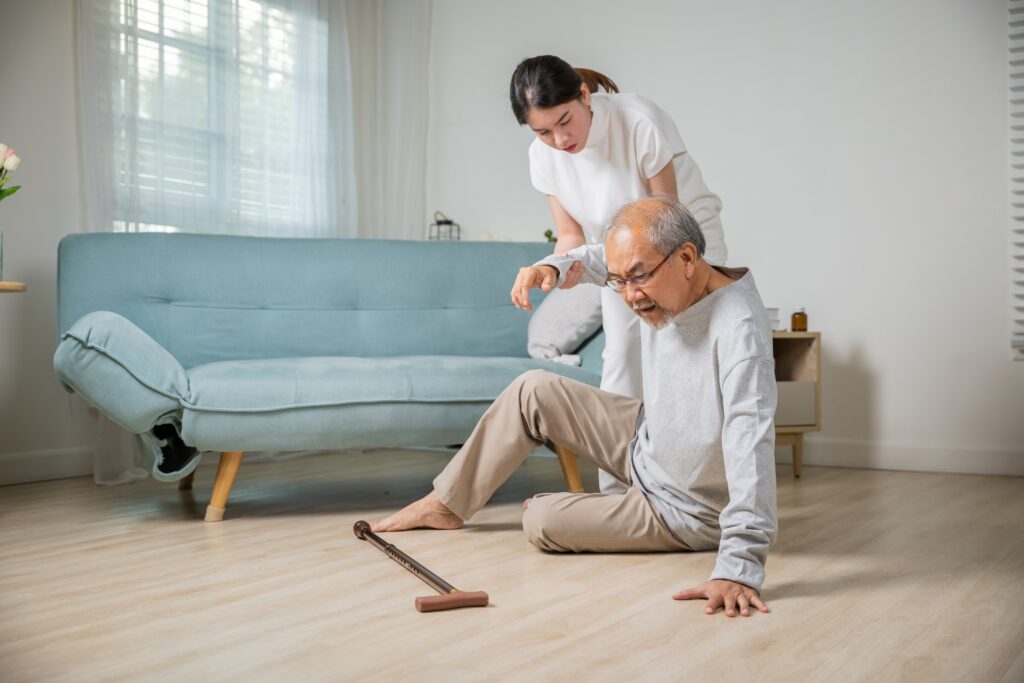
A fall that looks harmless can sometimes cause a significant fracture in a person with osteoporosis. Why does this happen?
The answer lies in what is happening inside the bone. Osteoporosis can gradually reduce bone strength without causing obvious symptoms, so a person may not realise that their bones have become more vulnerable until an injury occurs.
Key takeaways
- Osteoporosis can weaken the internal structure of bone, making it more vulnerable to fractures.
- A fall from standing height can be enough to fracture a weakened bone.
- Hip, wrist and spinal fractures are among the injuries associated with reduced bone strength.
- A fracture after a relatively minor fall may be a reason to assess bone health, not just treat the injury.
- Preventing another fracture involves looking at both bone strength and fall risk.
Why does osteoporosis make a minor fall more serious?
Healthy bone is not simply a solid, rigid material. It has a complex internal structure that gives it strength while keeping it relatively light.
With osteoporosis, bone density decreases and its internal architecture can become weaker. The bone may therefore be less able to withstand forces that would normally be tolerated without injury.
This does not mean that every person with osteoporosis will fracture after a minor fall. However, when bone strength is reduced, the same impact can have a very different effect.
For example, landing on an outstretched hand may result in a wrist fracture. A sideways fall may put significant force through the hip. In some people, a spinal vertebra can also fracture without a dramatic accident.
Is the fall itself the whole problem?
When someone develops an osteoporosis fracture after a small fall, doctors usually consider two things, the force involved and the strength of the bone receiving that force.
This is why the same fall can leave one person with bruising while another sustains a fracture.
Age-related changes in balance, vision, muscle strength or walking ability can also increase the likelihood of falling. Certain medicines and other health conditions may contribute as well. The overall picture matters rather than the fall being viewed in isolation.
What should you do after a minor fall?
Pain, swelling, difficulty putting weight through a limb or a noticeable change in movement should not automatically be dismissed because the fall seemed minor.
Depending on the injury, a doctor may assess the affected area and decide whether imaging is appropriate. If a fracture is confirmed, the assessment may also prompt questions about whether underlying bone weakness contributed.
This can be an important distinction. Treating the fracture addresses the immediate injury, while assessing bone health may help identify factors that could increase the risk of another fracture.
Can one fracture be a warning about bone health?
Yes. A fracture following relatively low-impact trauma may lead a doctor to consider whether osteoporosis or another cause of reduced bone strength should be investigated.
Assessment may include a review of medical history, medications, risk factors and, where appropriate, tests used to evaluate bone density.
Management varies between individuals. Depending on the findings, it may involve measures to reduce falls, appropriate exercise and nutrition, and medication for osteoporosis in selected patients.
Frequently Asked Questions
Can osteoporosis cause a fracture without a major fall?
It can. Some vertebral fractures may occur with relatively little trauma and may sometimes cause back pain, height loss or changes in posture. Others may produce few noticeable symptoms.
Does having osteoporosis mean I will definitely fracture if I fall?
No. Fracture risk depends on several factors, including bone strength, the direction and force of the fall, age, physical function and other health factors.
Which bones are commonly affected by osteoporosis-related fractures?
The hip, wrist and spine are commonly affected, although osteoporosis can contribute to fractures in other bones too.
Should I be assessed for osteoporosis after a fracture?
It may be appropriate, particularly when a fracture occurs after a low-impact injury or when other risk factors for reduced bone strength are present. A doctor can advise whether further assessment is needed.
Can osteoporosis be treated after a fracture?
Yes. Treatment decisions depend on the individual’s bone health, fracture history, other medical conditions and overall risk. A fracture can be an opportunity to discuss measures to reduce future fracture risk.
What should you do if a small fall causes significant pain?
A seemingly minor fall should not be judged only by how dramatic the accident appeared. If there is persistent pain, difficulty using the affected limb, difficulty walking or other concerning symptoms, medical assessment can help determine whether a fracture has occurred.
For someone who has already sustained a low-impact fracture, it may also be worth discussing whether their bone health needs further evaluation. At Orthocare, Dr. Ananda Vella can assess the injury and discuss whether further evaluation is appropriate based on the individual’s circumstances.